
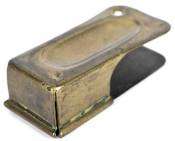
 The small, simple device known as the ACME No. 470 clicker—more famously called the “paratrooper cricket”—is one of the most recognizable and iconic tools associated with American airborne forces during World War II. Carried by paratroopers of the 101st Airborne Division, this compact signaling device played a critical role during one of the most chaotic and dangerous operations of the war: the D-Day invasion of Normandy.
From Orchestra Tool to Battlefield Signal
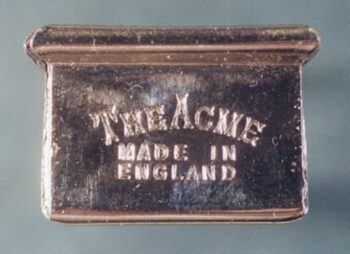
The origins of the cricket had nothing to do with combat. Manufactured by J. Hudson & Co. of Birmingham, England, the ACME clicker was originally developed in the 1920s as a timekeeping and signaling device for band and orchestra leaders. Its construction was simple yet effective: a small metal tab that, when pressed, produced a sharp, distinct “click.”
At some point during the early years of World War II, this humble device caught the attention of Allied forces. While the exact origin story remains unknown, it is widely believed that American troops—possibly members of U.S. Army bands stationed in Britain—recognized its potential as a discreet and reliable signaling tool. For airborne troops preparing for night operations behind enemy lines, the cricket offered a low-tech solution to a deadly problem.
Adoption by the 101st Airborne
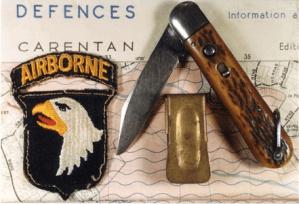 As planning intensified for Operation Overlord, the Allied invasion of Nazi-occupied France, the need for secure identification methods became critical. Paratroopers would be dropped at night, often scattered far from their intended landing zones. In the confusion of darkness, distinguishing friend from foe could mean survival.
The solution was brilliantly simple:
- One click – challenge
- Two clicks – correct response
This system allowed American paratroopers to identify one another without shouting or exposing their position to the enemy.
Recognizing its effectiveness, the 101st Airborne Division adopted the cricket and placed a large order with J. Hudson & Co., prompting increased production. These clickers were manufactured in several materials, including brass, nickel-plated brass, and later tin, as wartime material shortages affected production.
D-Day: June 5–6, 1944
 In the early hours of June 6, 1944, paratroopers of the 101st Airborne dropped into Normandy under cover of darkness. High winds, anti-aircraft fire, and navigation errors scattered units across miles of countryside. Small groups of soldiers found themselves isolated, disoriented, and often surrounded by enemy forces.
In that confusion, the cricket became an essential lifeline. Moving cautiously through hedgerows and fields, paratroopers clicked softly into the darkness and listened for the correct reply. It was a simple system, but it worked. The cricket helped scattered troops regroup, form cohesive fighting units, and carry out their objectives during the opening hours of the invasion.
Although originally intended for temporary use during the Normandy landings, many soldiers chose to keep their crickets as personal mementos of that historic operation.
A Lasting Symbol of the Airborne
Over time, the paratrooper cricket became more than just a tool—it became a symbol of ingenuity, survival, and brotherhood among airborne forces. Its legacy has been preserved in popular culture, appearing in films such as The Longest Day and the HBO miniseries Band of Brothers, as well as in numerous documentaries and museum exhibits.
For many, the faint metallic click represents the tense, uncertain moments faced by paratroopers on D-Day—and the quiet courage required to move forward into the unknown.
The ACME Clicker Today
Remarkably, the ACME No. 470 clicker is still produced today by J. Hudson & Co. in Birmingham, England—the same company that manufactured them during World War II. These modern clickers are not reproductions in the traditional sense, but rather a continuation of the original design, often produced using the same tooling and manufacturing techniques.
For collectors, historians, and airborne enthusiasts, owning an ACME cricket is more than acquiring a piece of equipment—it is holding a tangible connection to one of the most pivotal moments in history.
Why the Cricket Still Matters
The paratrooper cricket stands as a powerful reminder that in war, even the smallest tools can have the greatest impact. In the darkness of Normandy, amid chaos and uncertainty, a simple click helped unite soldiers, restore order, and ultimately contribute to the success of the Allied invasion.
Today, it remains an enduring symbol of the U.S. airborne forces, the courage of the men who jumped into France on D-Day, and the ingenuity that defined their fight.
See also: Paratooper Clicker